How to choose and solve a Sudoku variant
What makes a Sudoku variant different?
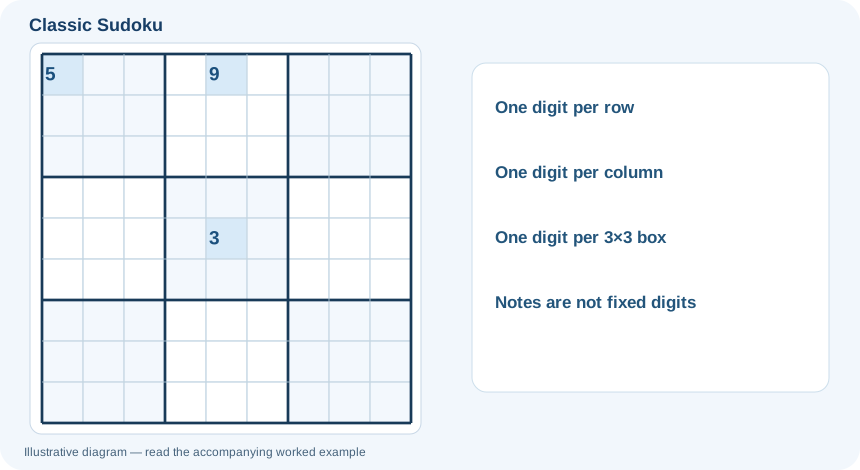
The classic Sudoku rule set uses digits 1–9 in a 9×9 grid: each row, column and marked 3×3 region contains each digit exactly once. A variation adds another constraint or changes the meaning of a region; that extra rule must be understood before any candidates are eliminated.
Compare the rules before choosing a puzzle
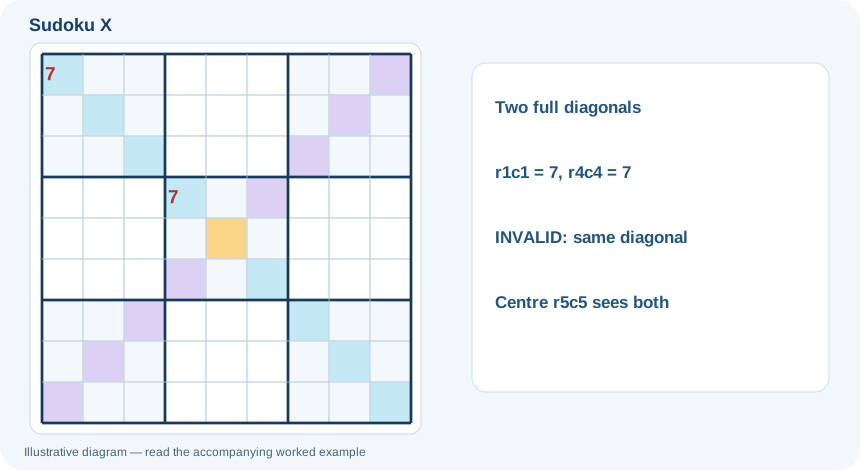
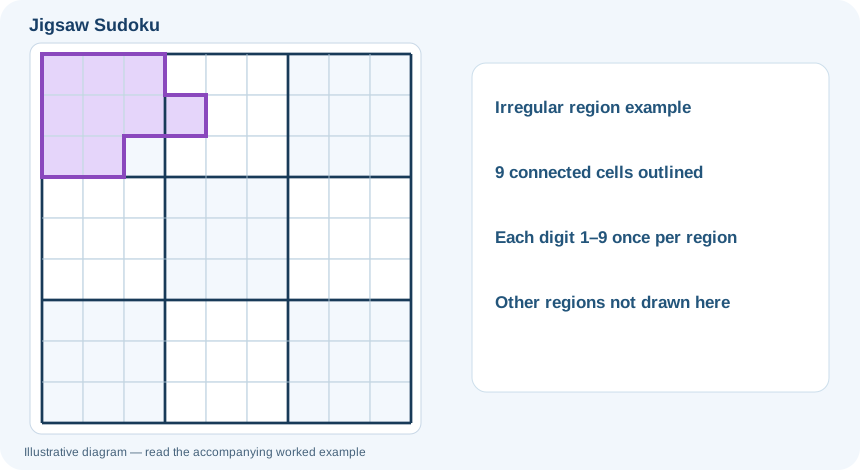
Sudoku X adds two diagonal no-repeat constraints, so an entry on either main diagonal must also agree with the other eight positions of that diagonal. Jigsaw Sudoku replaces regular 3×3 boxes with irregular nine-cell regions, but the no-repeat principle remains.
Arithmetic and placement are not the same
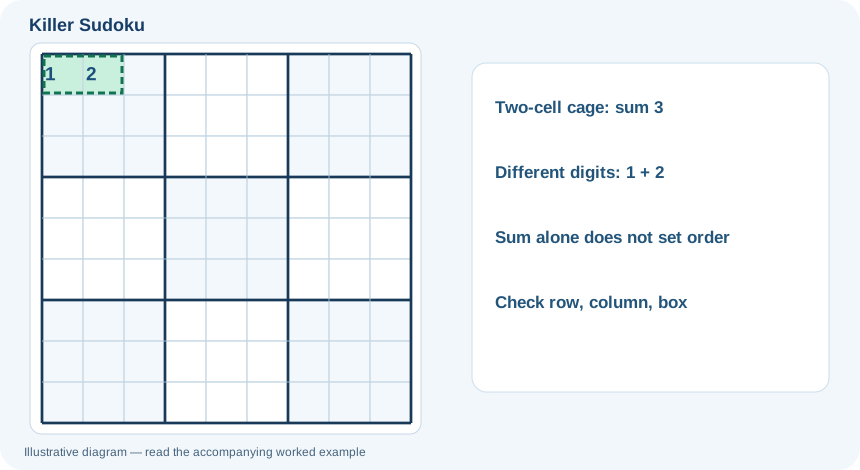
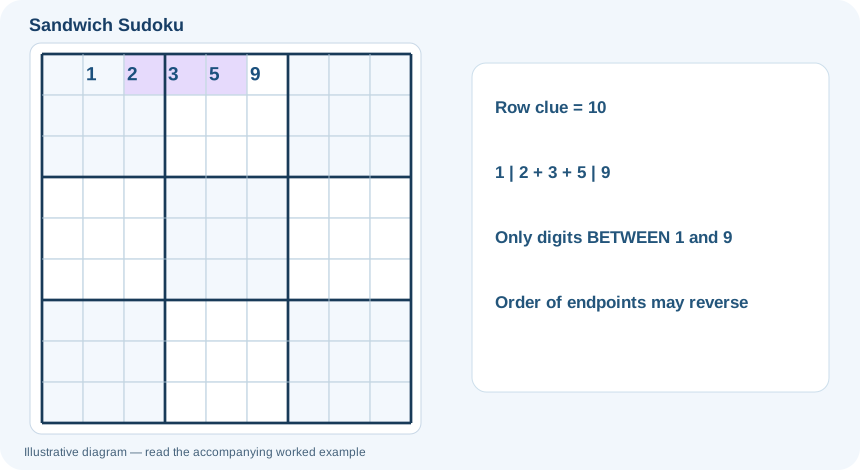
Killer Sudoku adds numbered cages with sums, usually without repeated digits inside each cage. A valid-looking digit can still be wrong if the cage would exceed its target. Sandwich Sudoku requires comparing the sum of digits between 1 and 9 in a given row or column.
Choose a good first step
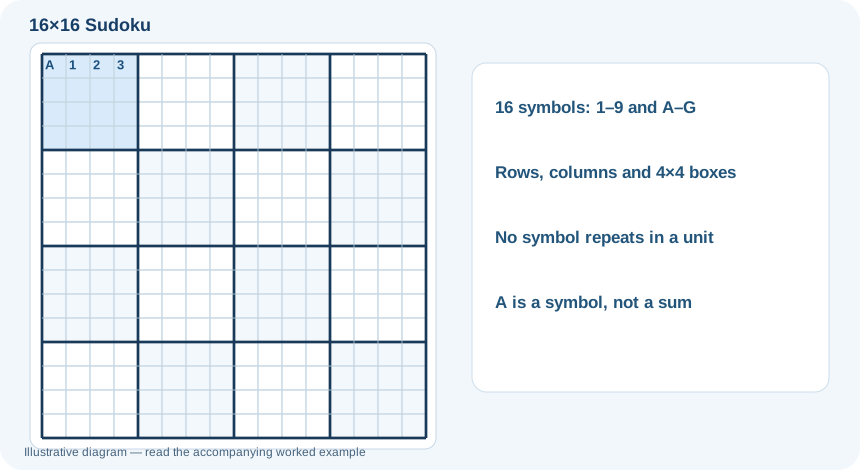
If you are learning, begin with Classic to practise standard row/column/box restrictions; then try Sudoku X for diagonals or Jigsaw for region tracking. Before starting Killer or Sandwich, read the extra arithmetic rule and work a simple example. For a larger board such as 16×16, check the displayed symbols and region layout before using any candidates.