


Your Sudoku Academy
35 guided strategies and 12 interactive logic challenges, from basic deductions to advanced solving.

Start in the browser with no account, choose six difficulty levels and modern variants, then learn strategies or continue in the apps whenever you want.
Build your Sudoku skills with 35 guided strategies and 12 interactive exercises.
Choose either academy. Each has its own lessons and practice.
Choose levels and puzzle count, print on paper or save as PDF, with optional answers.
Master Sudoku deduction with 35 guided strategies and 12 interactive exercises.
35 guided strategies and 12 interactive logic challenges, from basic deductions to advanced solving.
Start where you are comfortable and move up whenever you are ready. Every level opens as a real playable puzzle in your browser.
A relaxed start with more clues.
Play Easy →Balanced logic and comfortable pacing.
Play Medium →Fewer clues and sharper deductions.
Play Hard →Advanced solving with sparse clues.
Play Expert →Deep chains and demanding logic.
Play Master →The most demanding classic challenge.
Play Grandmaster →Shared puzzles open as playable web boards. The full app adds richer rules, progress, rewards and offline play.
The timeless grid, from Easy to Grandmaster.
Classic Sudoku plus both main diagonals.
Irregular regions with clean outlined shapes.
Cages and sums add arithmetic deduction.
Use edge sums between 1 and 9.
A larger board with symbols 1–9 and A–G.
Open a strategy, step through the board, inspect highlighted cells and candidates, then share that exact lesson with someone else.
Explore strategy lessons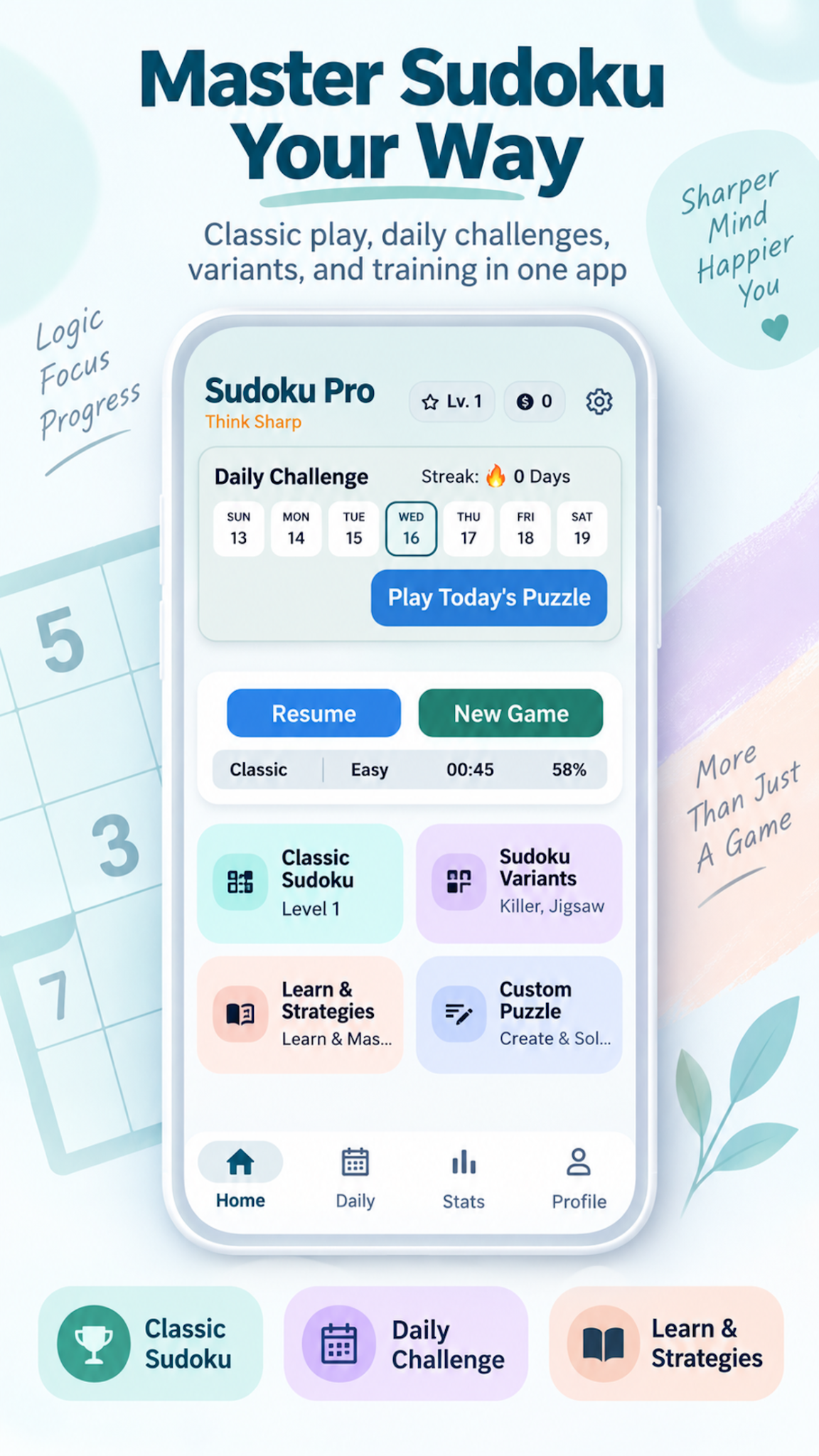
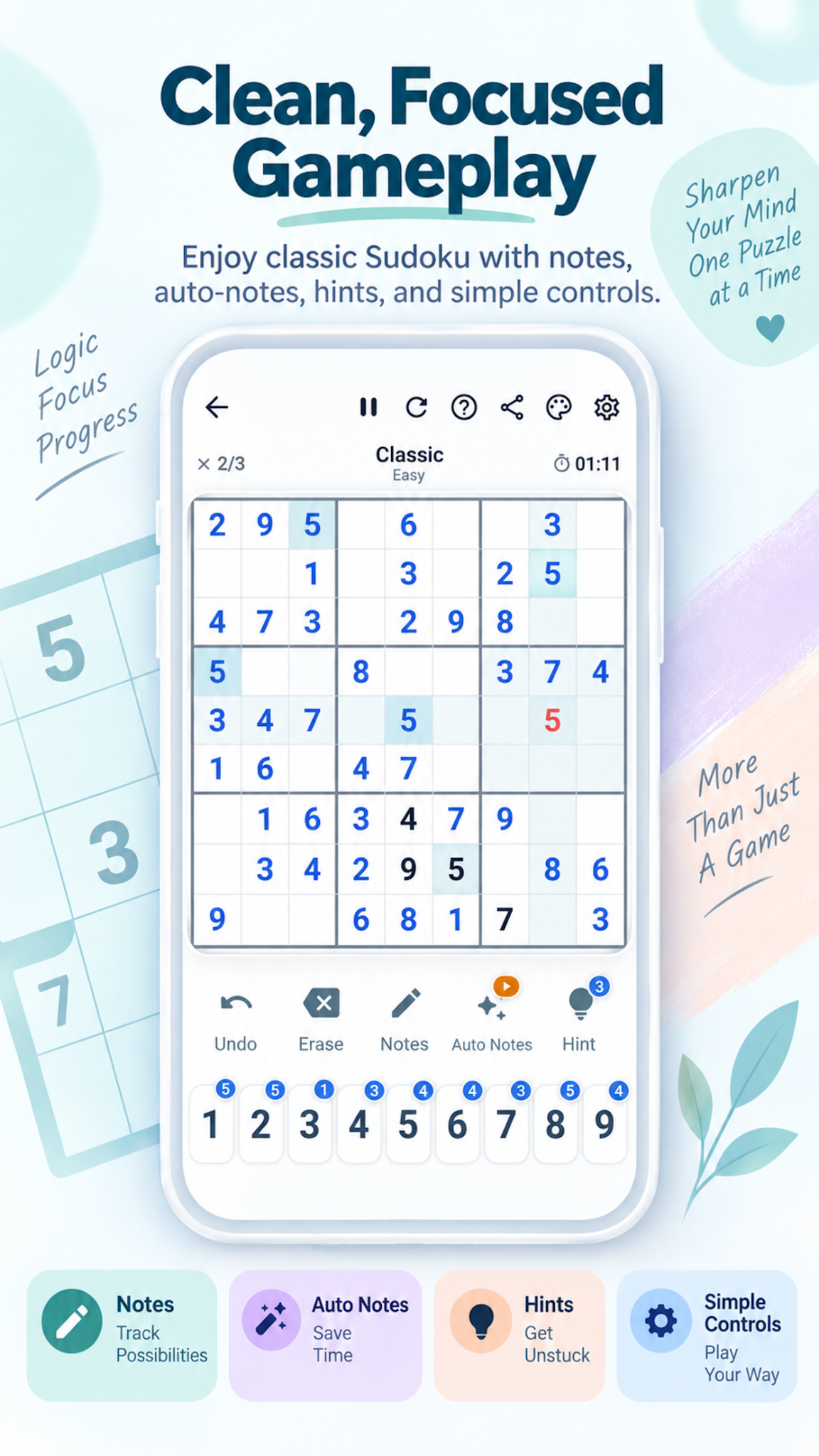
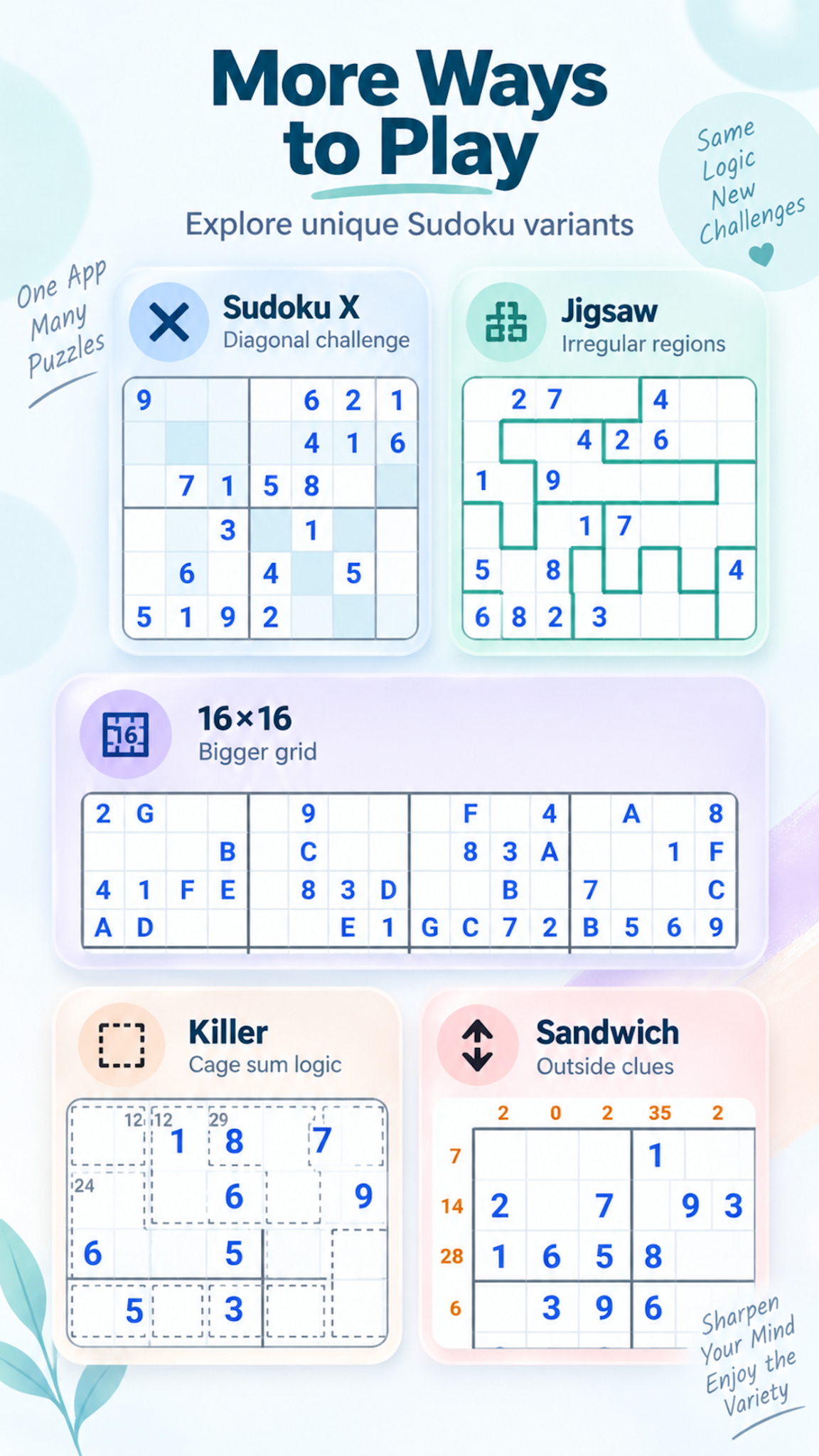
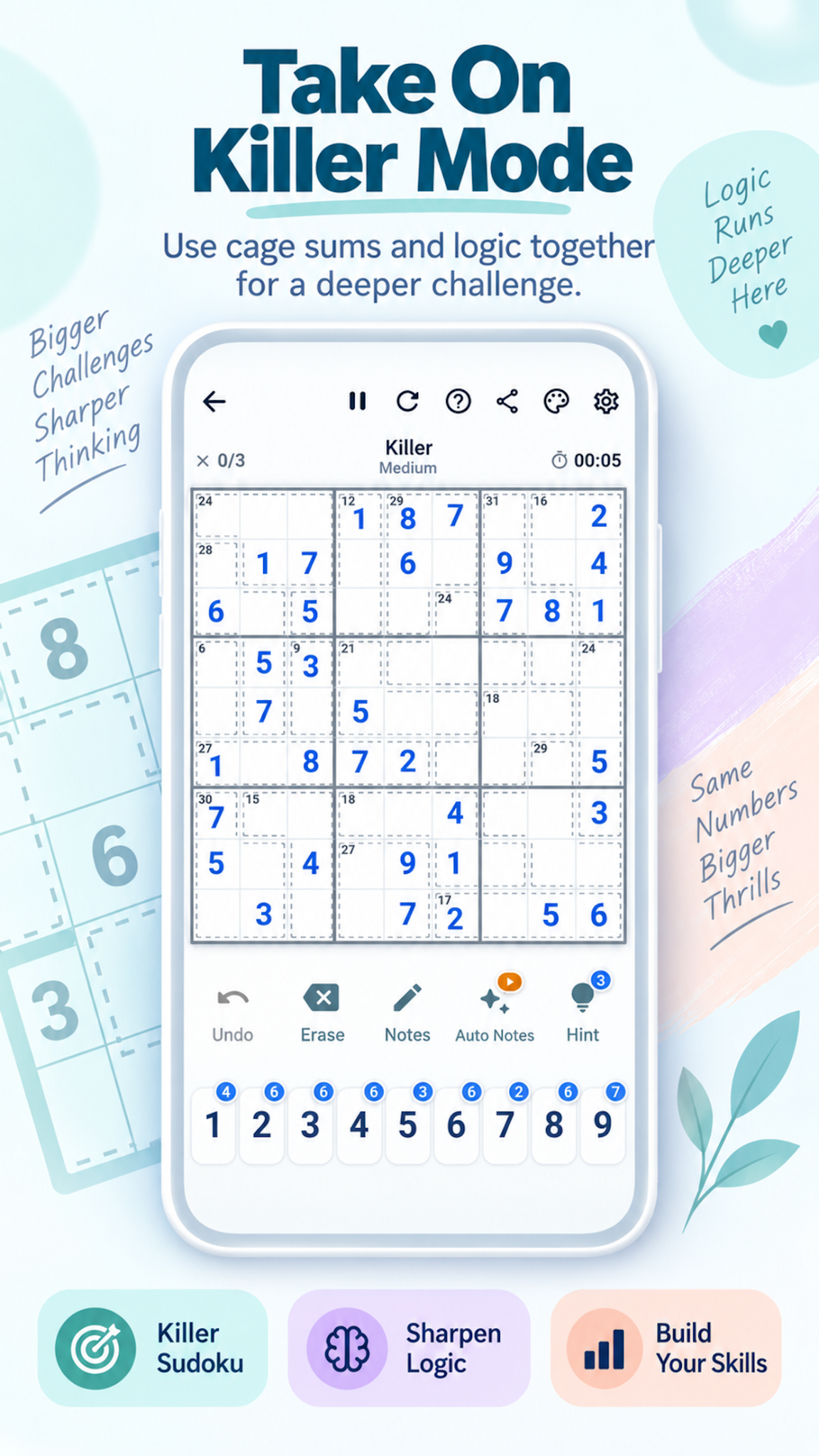
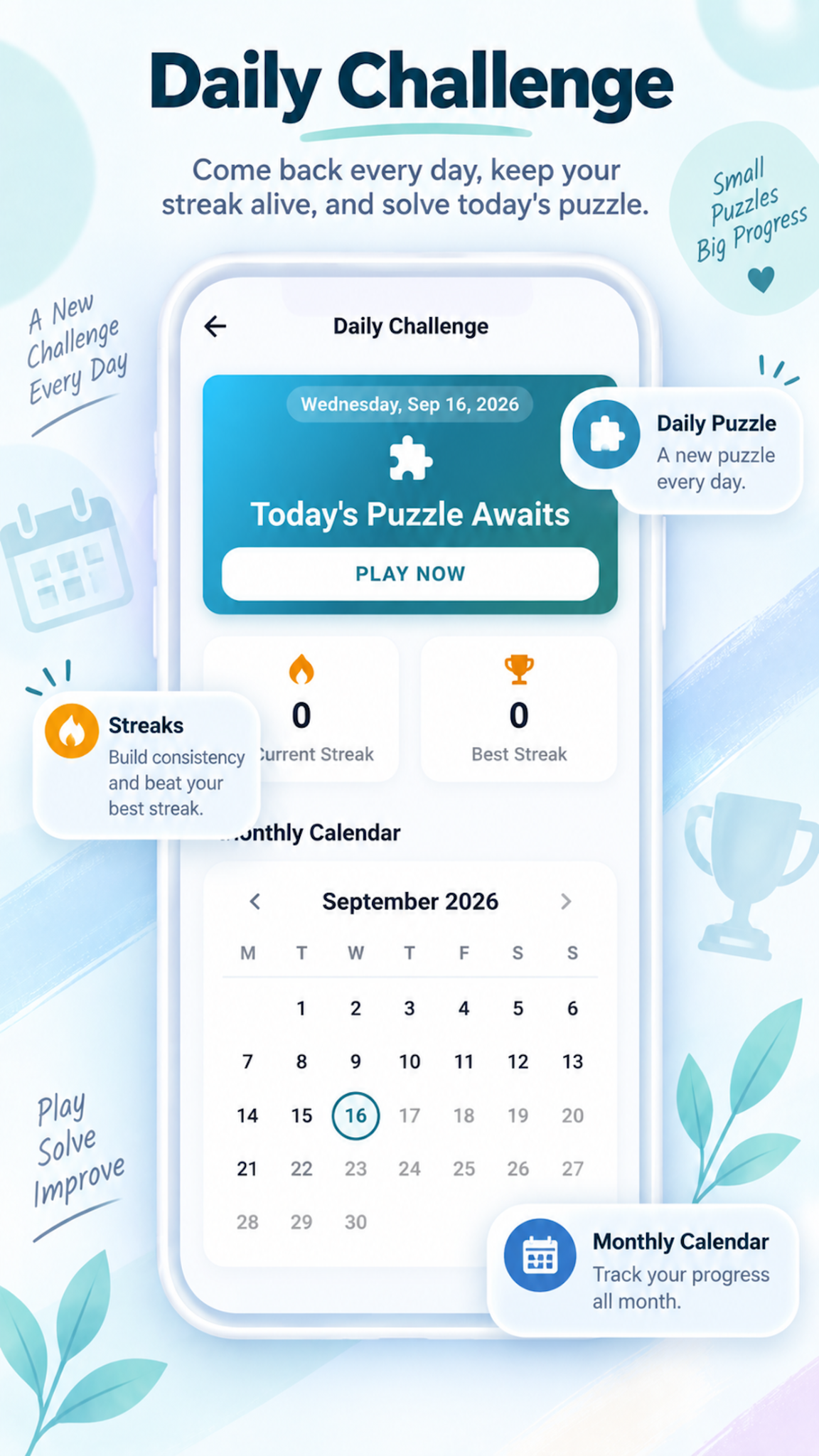
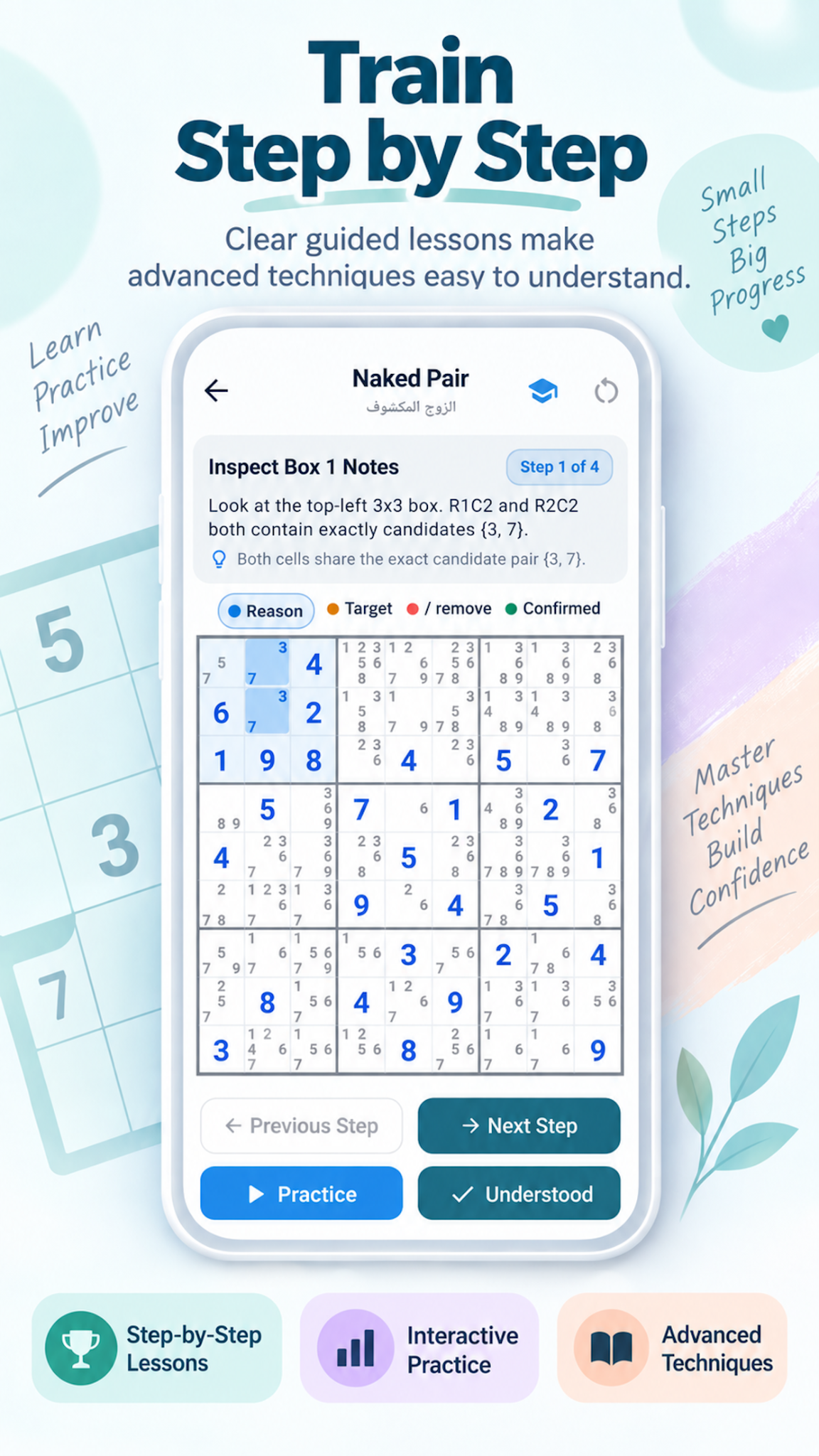
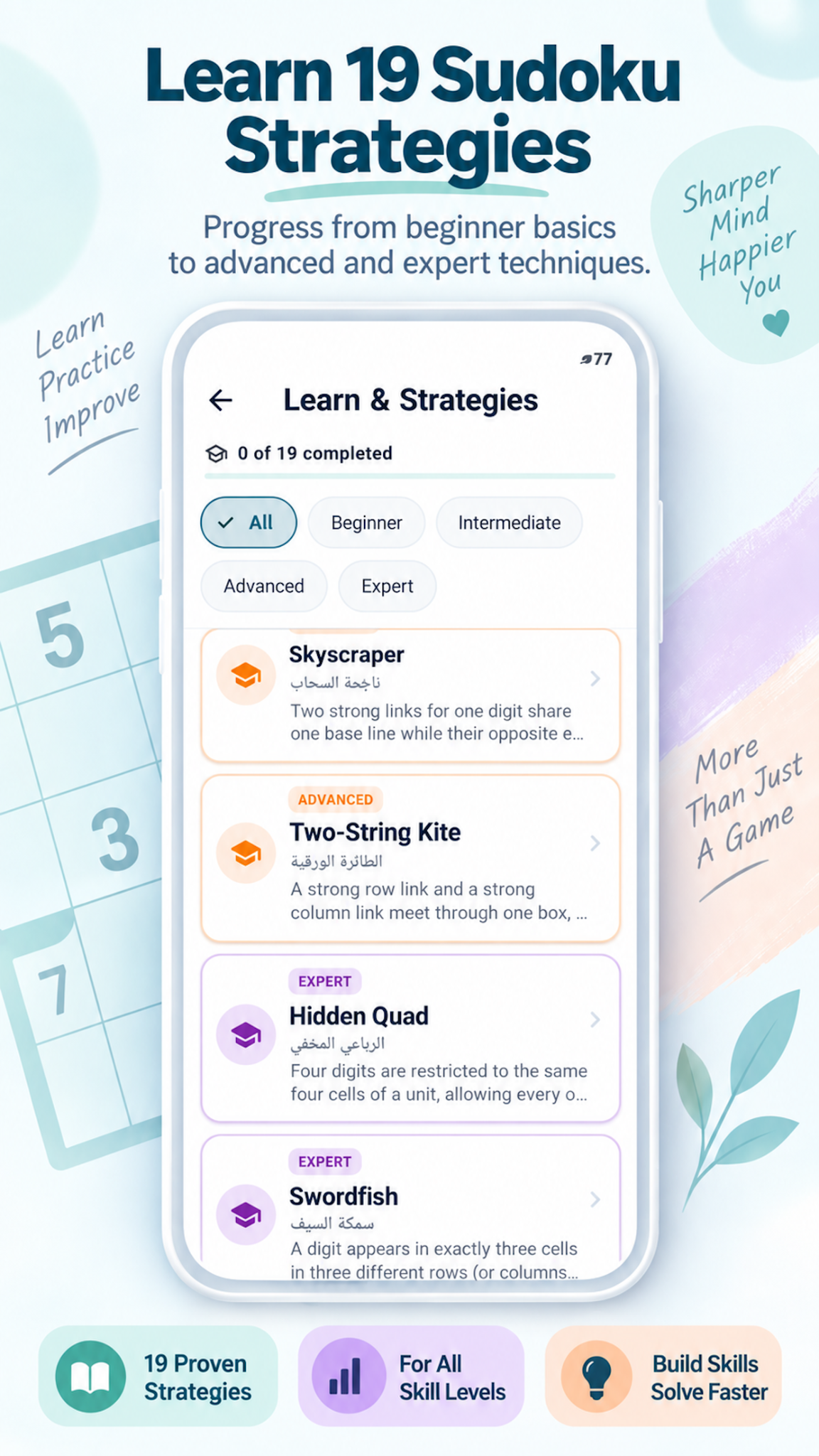
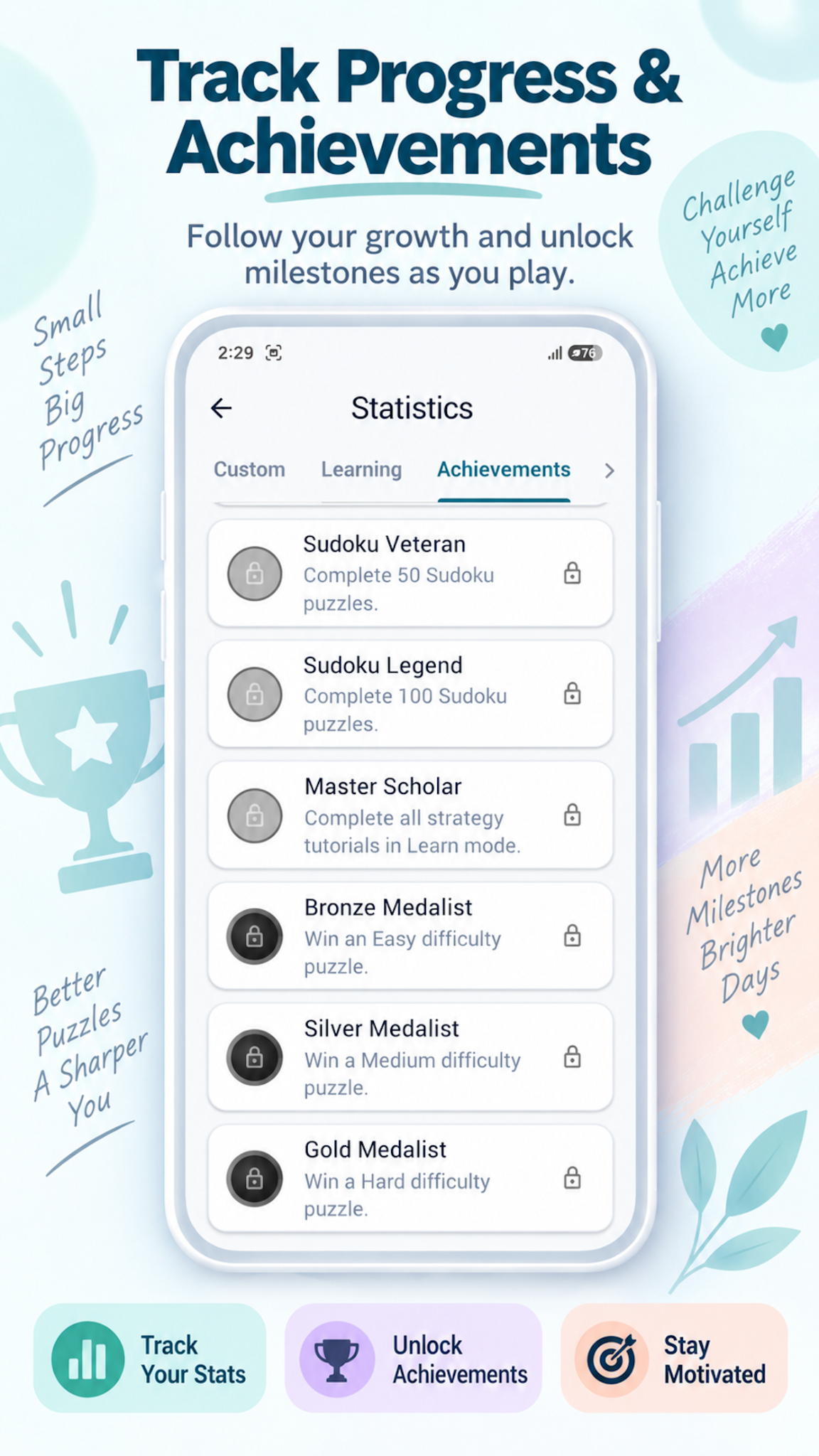
Daily challenges, variants, achievements, guided learning, sharing, sync and a focused desktop experience.
A Sudoku move is justified by the rows, columns and boxes around it—not by a guess. Here is a complete one-row deduction that you can check before you touch the game board.
2 4 6 │ 1 □ 8 │ 3 5 7
When several cells are empty, write only the digits that survive the row, column and box checks. A naked single has just one remaining candidate in a cell; a hidden single is the only location for a digit inside a region.
The two techniques may place the same number, but they prove it in different ways. Learn that difference before attempting advanced patterns such as X-Wing.
Open guided Sudoku practiceNo. Here eight distinct digits are already visible, leaving exactly one possibility. With two or more blanks, you also need constraints from their columns and boxes, or another solving technique.
Start with pencil marks and the hidden-single guide, then test the reasoning on a real board. The goal is to explain each placement or elimination, not to memorize a solved grid.